


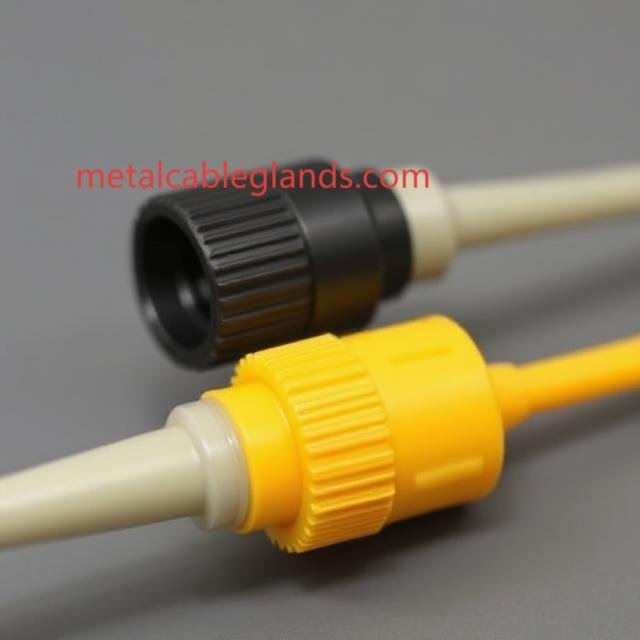
The growing reliance on sensitive electronic control networks has made shielding performance more important than ever, especially when an EMC Cable Gland must operate at the intersection of multiple electrical environments. As modern systems integrate automation, data transmission, and monitoring into increasingly compact spaces, the shielding continuity established through an EMC Cable Gland becomes a critical factor in preventing disruptive interference that can compromise equipment behavior or distort essential signals.
In many facilities where digital and power circuits share the same infrastructure, the pathways that guide cables into enclosures often represent the most vulnerable point of exposure. Even when cables are carefully selected for durability, the transition from external routing to interior terminals introduces a gap where electromagnetic noise can enter. Engineers therefore rely on shielding-supported entry components to ensure the cable’s protective braid does not lose contact or shift during installation. This mechanical assurance preserves the integrity of the cable’s protective envelope while maintaining a stable ground interface for sensitive electronics.
Industrial automation platforms have expanded rapidly over the past decade. Robotic arms, automated conveyors, high-frequency sensors, and programmable control modules now operate within centimeters of one another. The electrical noise produced by rapid switching equipment, magnetic motors, and variable-speed drives can easily spill into adjacent circuits if shielding pathways are inconsistent. Advanced cable entry components fill this structural role by delivering both clamping security and shielding continuity, reducing the risk of unpredictable behavior that could interrupt production or reduce accuracy. Zhejiang Hongjuesi Connector has focused on refining these protective interfaces to withstand real-world operating conditions, enabling stable performance across a wide range of industrial applications.
Outdoor systems present a different set of shielding challenges. Communication towers, environmental sensing facilities, and public infrastructure equipment rely on uninterrupted signals to collect and transmit data under varying weather conditions. The exposure to moisture, dust, vibration, and temperature fluctuations can gradually weaken poorly designed cable entry structures. A strong interference-resistant interface helps maintain reliable shielding contact even as the surrounding environment changes. This long-term consistency is essential for equipment that must operate continuously without direct supervision or frequent maintenance cycles.
Control cabinets also illustrate how shielding can directly affect safety and operational stability. Building management systems depend on accurate feedback from temperature, pressure, access, and environmental sensors. Even slight distortions in the signal lines can lead to unnecessary alarms, delayed responses, or misinterpreted data. Structured cable entry solutions designed to support shielding continuity ensure that the protective braid or foil remains firmly engaged, helping the control network maintain clarity even when electrical conditions fluctuate or when high-power devices activate nearby.
The transportation sector faces similar concerns. Railway signaling, electric vehicle charging points, and smart highway systems rely on precise communication channels built into compact equipment enclosures. These installations must manage both power distribution and real-time data transmission within confined spaces. A stable shielding interface prevents cross-interference that could delay commands or interrupt communication between network segments. Zhejiang Hongjuesi Connector incorporates robust construction methods into its protective components, supporting consistent grounding and shielding paths that enhance system reliability.
Another area where shielding is essential involves manufacturing processes that depend on sensor accuracy. Whether monitoring fluid levels, detecting component alignment, or reading high-frequency pulses, sensors must interpret signals without distortion. When external noise enters through an unprotected cable entry point, even small disturbances may lead to incorrect readings that affect quality control. A reinforced shielding connection helps maintain stable measurement conditions, allowing equipment to operate with the precision required for advanced production systems.
As industries continue to adopt technologies that combine communication, automation, and real-time feedback, shielding-supported cable entry solutions will remain vital to ensuring dependable operation. Zhejiang Hongjuesi Connector provides protective components designed to support these complex environments, offering reliable interfaces that help engineers achieve stable performance across diverse applications. Additional information about suitable products can be found at https://www.metalcableglands.com/product .

 English
 Arabic
 French
 Spanish
 Portuguese
 Deutsch
 Turkish
 Italiano
 Russian
 Romaian
 Portuguese (Brazil)
 Greek
Greek