


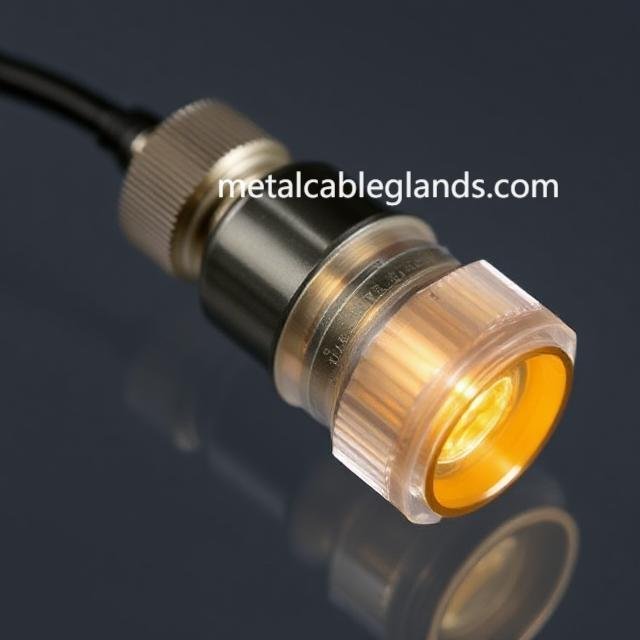
The Plastic Cable Gland is more than a simple accessory—it’s a precision-engineered component that ensures cable safety, sealing, and stability in electrical systems. Behind its compact design lies a combination of advanced engineering principles and detailed material optimization. Zhejiang Hongjue S Connector (HJSI) has developed a strong reputation for applying innovative design techniques and precision manufacturing to produce cable glands that meet international standards and endure demanding operational conditions.
A well-designed cable gland must perform several functions simultaneously. It must anchor the cable firmly, seal against moisture and dust ingress, and relieve strain from mechanical forces. For plastic glands, achieving these goals depends on a combination of geometry, threading, and sealing components. Engineers must carefully balance wall thickness, tightening torque, and compression ratio to ensure both easy assembly and long-term stability. HJSI’s engineering team employs advanced CAD modeling and stress simulation tools to perfect these design aspects before mass production.
The sealing mechanism is central to gland performance. Plastic cable glands often use an internal elastomeric sealing ring—commonly made from NBR or EPDM—to achieve a watertight barrier between the cable and the gland body. The seal compresses evenly when tightened, preventing leaks and maintaining consistent pressure over time. HJSI applies precision molding techniques to guarantee uniformity in each component, ensuring a perfect fit between the gland’s clamping insert, seal, and thread assembly.
Thread design is another critical engineering factor. The accuracy of the threads determines how effectively the gland can be installed and secured to an enclosure or junction box. HJSI designs both metric and PG thread options with precise tolerances to prevent stripping or over-tightening. Plastic’s inherent flexibility allows the threads to absorb vibration without loosening, an important advantage in industrial and outdoor installations where mechanical movement is common.
Mechanical strain relief is equally essential. A well-engineered gland should prevent the cable from being pulled or twisted, which can otherwise damage internal conductors. HJSI uses a combination of tapered compression and ribbed clamping inserts to distribute stress evenly along the cable sheath. This ensures secure holding power while avoiding deformation or insulation damage. The company’s design philosophy focuses on user-friendly installation—allowing efficient assembly without compromising safety or performance.
Temperature and environmental considerations also shape the engineering process. Plastic cable glands must perform consistently under a wide range of operating temperatures, often from -40°C up to 100°C or more, depending on the material. The gland’s geometry, seal type, and material selection must all work together to resist expansion, contraction, and brittleness caused by thermal cycling. HJSI performs rigorous testing under simulated field conditions to validate long-term reliability.
Another aspect often overlooked is electrical insulation. Because plastic is a non-conductive material, it inherently provides electrical isolation between cable cores and enclosure surfaces. This property is particularly valuable in low-voltage and control applications where safety and signal integrity are paramount. HJSI’s plastic glands are tested for dielectric strength to ensure compliance with IEC and IP standards, providing users with confidence in both mechanical and electrical performance.
Ease of maintenance and versatility are also core to good engineering. The modular structure of many plastic glands allows for quick disassembly, making them ideal for environments requiring frequent inspections or cable changes. HJSI’s modular designs enable compatibility across a wide range of cable diameters and enclosure types, enhancing flexibility for installers and system designers alike.
In addition to functional design, HJSI focuses on aesthetic and ergonomic considerations. Smooth exterior contours, rounded edges, and color-matching options ensure that the glands complement the overall equipment design. These details reflect a broader engineering philosophy that values both functionality and visual consistency—important for industries such as automation, telecom, and renewable energy.
The Plastic Cable Gland exemplifies how careful engineering can transform a small component into a critical part of system reliability. Through continuous innovation, Zhejiang Hongjue S Connector integrates scientific design principles, high-precision molding, and quality assurance to deliver products that perform under pressure while maintaining long-term durability. For more insights into HJSI’s advanced cable gland solutions, visit https://www.metalcableglands.com/ .

 English
 Arabic
 French
 Spanish
 Deutsch
 Turkish
 Dutch
Dutch
 Italiano
 Russian
 Romaian
 Portuguese (Brazil)
 Greek
Greek