


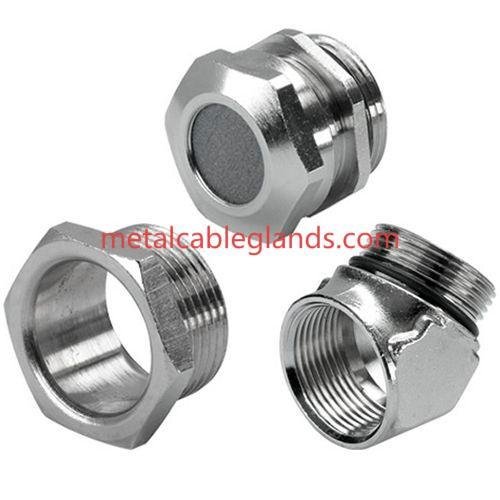
In complex electrical assemblies, engineers frequently encounter situations where cable diameters and entry points do not align, making the Cable Gland Reducer an essential interface component that allows smooth dimensional transitions. When different installation standards converge within a single system, the presence of a well-engineered Cable Gland Reducer becomes the difference between a secure enclosure penetration and an unreliable connection that may compromise system performance. Zhejiang Hongjuesi Connector incorporates this understanding into its manufacturing processes to ensure each reducer performs consistently across a range of industrial environments.
A reducer’s adaptability begins with the materials selected for its construction. Electrical systems in industrial plants, transportation hubs, and energy facilities operate under environmental pressures that extend far beyond ordinary indoor conditions. Components are routinely exposed to humidity, mechanical vibration, airborne chemicals, and constant temperature shifts. To endure these factors, reducers must be manufactured from materials that resist deformation and chemical degradation while maintaining structural uniformity over years of use. The precision machining used by Zhejiang Hongjuesi Connector ensures that the reducer’s threaded engagement points maintain their integrity despite prolonged environmental stress.
Core performance in a reducer is tied directly to how effectively it maintains enclosure protection while adjusting the cable passage size. This requirement demands a balance between mechanical strength and sealing stability. When reducers are insufficiently engineered, they can introduce microscopic gaps, allow moisture or dust intrusion, or even create stress points that weaken the overall cable interface. Because reducers serve as transitional fittings rather than primary glands, their reliability depends heavily on precision threading, concentricity, and smooth engagement. A misaligned reducer can compromise the entire enclosure, so structural consistency becomes a core performance measure in industrial applications.
In addition to environmental and mechanical considerations, reducers must support installation efficiency. Electrical technicians often work under time pressure, especially during system upgrades or scheduled maintenance intervals. A reducer with poorly formed threads or inconsistent surface finish can slow installation, increase the risk of cross-threading, or require rework that interrupts workflow. With refined manufacturing techniques and strict surface-quality control, Zhejiang Hongjuesi Connector ensures that reducers engage smoothly, allow rapid alignment, and remain stable once tightened into position. This reduces fatigue for installers and minimizes the likelihood of errors during complex wiring operations.
The versatility of reducers becomes evident across the diverse application fields that rely on them. In industrial automation systems, where sensor cabling and power lines often vary in dimension, reducers enable equipment designers to standardize panel openings without sacrificing cable compatibility. In marine and offshore environments, reducers help maintain enclosure continuity despite cable-size variations caused by equipment sourced from multiple suppliers. Meanwhile, the transportation industry often employs reducers to route communication and control wiring through housings designed to accommodate standardized cable entries, ensuring that environmental resistance remains consistent even when integrating newer or smaller-diameter cables.
Renewable energy systems also benefit from the flexible role of reducers. Solar inverters, wind turbine control cabinets, and energy storage enclosures frequently incorporate multi-origin cable arrangements requiring stable transitions. A high-quality reducer allows engineers to manage these variations without altering the enclosure or compromising weather protection. As these technologies expand, so does the need for adaptable cable management components capable of blending legacy configurations with newer generation cables.
Zhejiang Hongjuesi Connector’s reducers are designed with these diverse industrial requirements in mind, integrating mechanical stability, corrosion resistance, and dimensional accuracy into each product. The company’s focus on precise machining and reliable materials ensures that reducers function as dependable transitional components capable of supporting both high-density wiring systems and long-term environmental exposure.
Organizations that manage large-scale electrical installations continue to rely on reducers as quiet yet indispensable parts of their infrastructure. Their ability to harmonize differing cable sizes and enclosure requirements reinforces operational continuity, helps prevent premature equipment wear, and supports efficient maintenance cycles. For more details on available reducer types and application solutions, visit https://www.metalcableglands.com .

 English
 Arabic
 French
 Spanish
 Portuguese
 Deutsch
 Turkish
 Dutch
Dutch
 Italiano
 Russian
 Romaian
 Portuguese (Brazil)